September 2024, I started a book club, and even thought it’s only been 3 months, I can confidently say that it is one of the best decision I had.
This project came to life four months ago when I read a book that had me itching to discuss it with someone. And what better way to debate books than with friends over food and coffee?
In this post, I’ll be sharing reviews of each book we’ve read together, highlighting whether each one makes a good book club pick. If you’re thinking of starting a club of your own, I hope these recommendations inspire you!
These reviews will be spoiler free :))
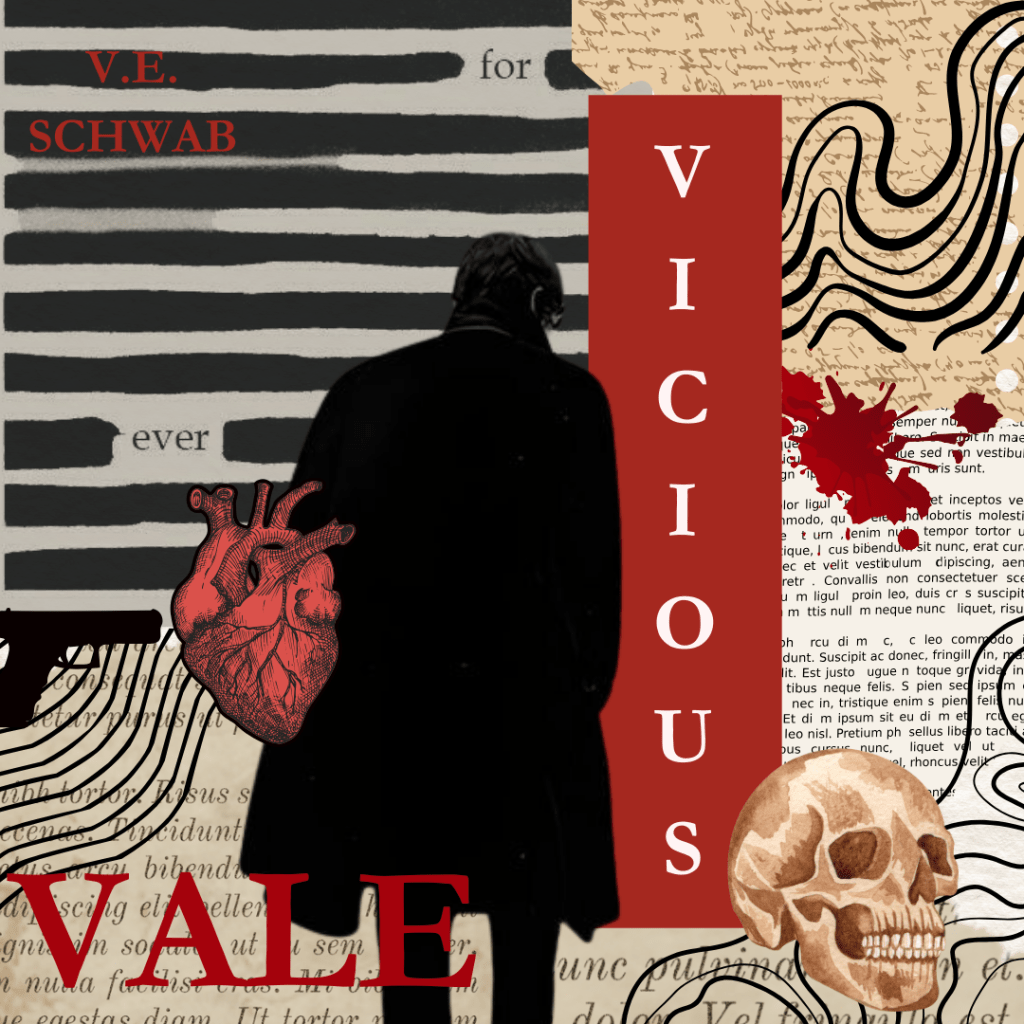
Book #1: Vicious by V. E. Schwab
Review:
Genre: Sci-fi, Magical Realism, Supernatural Fiction, Fantasy Fiction
“Plenty of humans were monstrous, and plenty of monsters knew how to play at being human.”
– V. E. Schwab
What I brilliant way to kick off our book club!
Vicious is at its core a book about two over achievers who thrive to be the best in everything they do. And when these college roommates make a scientific (and supernatural) discovery that completely change what they thought was possible, their friendship is put to the test!
This book does an incredible job of exploring the nuances of good and evil, showing us that morality is rarely as black-and-white as it seems. V.E. Schwab does a great job at raising the question: should we judge people for what they do or why they do it? And even though I thought I knew the answer before reading the book, she managed to make me reevaluate what I think is true.
The characters are absolutely captivating and so well-developed that I couldn’t help but feel attached to them. I found myself rooting for their success, even when their goals weren’t exactly noble. Victor, in particular, stands out as one of my all-time favorite book characters. His dynamic with Mitch and Sydney was one of the best aspects of the book—unexpected, but filled with so much loyalty and heart that it made me love them even more.
The plot is just as compelling as the characters. It hooks you from the start and keeps you turning pages, one after another. I think the pacing is also particularly spot-on: it begins with a slow build, diving into backstories and time jumps that tease just enough information to keep you on edge. Then, as the story progresses, it ramps up into a series of action and twists, keeping you stuck to the pages until the very end. The way the characters get their powers is another highlight—it’s unique, scientific yet mystical, and plays such a huge role in shaping who they become.
Personally I found the best part of the book to be the dynamic between Victor and Eli. Their relationship is so intense and complicated, and it’s what really drives the story. It’s not a battle between good and evil, but rather bad and worse. Both characters kill, both lack empathy, and both are entirely driven by their own personal agendas. Yet, what makes them different is the way they justify their actions. Their opposing perspectives make for such an interesting philosophical question: how do we determine what’s right and wrong? Is it through rational thinking, or through what feels right—what doesn’t provoke a negative response from our conscience?
The book doesn’t tell you who to root for—it just presents these morally gray characters and lets you decide for yourself. And honestly? I loved that.
Please don’t be put off by the mention of superheroes or science fiction elements—this world actually feels close to our own, making it a perfect read even for those who don’t typically dive into this genre and want to give it a try!
Finally, if you’re a fan of Attack on Titan, I highly recommend giving this book a try. The moral dilemmas and overall themes share a similar vibe that’s sure to resonate with you!
To conclude, is this book a good book club pick? YES
Fun Fact: The V.E. in the author’s name stands for Victoria Elizabeth, which also happens to be the two main character’s names: Victor and Eli 🙃
Book #2: A Dowry of Blood by S.T. Gibson

Review :
Genres : Gothic fiction, Fantasy, Paranormal, Historical fantasy
“You could have kissed me or slit my throat and either would have made as much sense.”
— S.T. Gibson, A Dowry of Blood
It’s queer, it’s gothic, it’s toxic, it’s lyrical, and it has polygamous vampires.
Honestly, that’s all I needed to know before wanting to read the book. But I understand that some of you might want a little more, so I’ll try to convince you through this review that A Dowry of Blood is definitely worth checking out!
The second novel we read in our book club is, at its core, a love letter written in blood and grief. It’s intense, poetic, at times devastating, and yet somehow still incredibly tender. However, before anything else, I should start by noting that this book is intended for mature audiences: It includes vivid depictions of sex, emotional and psychological abuse, and violence (because, vampires).
At its heart, A Dowry of Blood is a story about surviving a toxic, controlling relationship and growing into your own power all the while discovering yourself. We follow Constanta, the first of Dracula’s brides, as she recounts their history. The writing is absolutely stunning. The prose flows like poetry, full of imagery that completely envelops you in its gothic atmosphere. Gibson chose to write the story as a series of letters addressed directly to Dracula, though she never once names him. That choice alone makes the narrative feel more personal, more raw, and even more intimate.
As we navigate their story, we travel across different parts of the world and through various time periods. I loved this aspect of the novel, as it allowed us to glimpse different cultures and ways of living throughout history. From plague-ridden cities to decadent castles and bustling theaters, I felt like I was right there, standing in the background, watching it all unfold. The book is immersive and moody, soaked in gothic seduction without ever losing sight of its emotional core.
I also really enjoyed the vampire lore. The magical aspect of it was beautiful, and I appreciated how becoming a vampire wasn’t an overnight transformation. There’s a slow evolution (senses sharpening, humanity slipping away) which made it feel both grounded and believable.
And while I wouldn’t personally engage in polygamy, especially not in real life, I think in magical fiction it adds an interesting layer to the story. Here, it creates space to explore power dynamics, control, intimacy, and ultimately, the idea of found family.
What Gibson does so brilliantly is show the slow erosion of autonomy in an abusive relationship. Dracula is charismatic, loving even, but everything he gives, he later uses as a weapon. He chooses vulnerable people, shapes them, controls them, and calls it love. The gaslighting is so well-written that I found myself getting genuinely angry on Constanta’s behalf more than once.
And yet, it’s also sexy. And that’s what makes it complicated.
This book doesn’t shy away from that tension. It acknowledges that abusive relationships can be intoxicating, that love can coexist with harm, and that sometimes the scariest thing isn’t the violence, it’s how much you still want to stay.
The other brides are also what makes this story great:
- Magdalena is a standout. Her arc from rival to soulmate is beautifully nuanced. I loved the way jealousy turned into love, and how her relationship with Constanta grew organically into something layered and meaningful.
- Alexis brought so much chaotic energy into the story. He added life and humor to a household that otherwise felt heavy and oppressive. He challenged Dracula’s unspoken rules and injected some much-needed rebellion. The only small critique I have is that sometimes Alexis and Constanta’s dynamic leaned a little too close to a mother/son vibe while still being romantic, which felt a bit odd, but it wasn’t enough to really bother me.
In summary, A Dowry of Blood is equal parts tragic, romantic, and empowering. And it’s absolutely book club material, there’s so much to unpack: emotional abuse, survival, chosen family, power dynamics, and liberation, all woven into one elegant, gothic tapestry.
If you’ve already read A Dowry of Blood, I’d love to hear your thoughts! Did you fall for Dracula at first? Did you spot the red flags from the beginning? Let’s talk about it!
And if you haven’t picked it up yet, trust me, it’s worth sinking your teeth into!
Book #3: Klara and the Sun by Kazuo Ishiguro

Review:
Genres: Science-fiction, Dystopian
“There was something very special, but it wasn’t inside Josie. It was inside those who loved her.”
— Kazuo Ishiguro, Klara and the Sun
Since reading this book, I’ve recommended it to everyone I know, so it was about time I wrote my review!
After a not-so-great reading experience the month prior (I won’t write a review on the book in question since I didn’t finish it), the club was feeling a bit down and unmotivated. We wanted a book that would reignite our love of reading while also stirring thoughts and emotions along the way. Safe to say, this book excelled at the task. (Thanks Jeff from Smith&Son Paris for the rec!)
Without going into too much details, this novel follows Klara, an Artificial Friend, or AF as she’s called in the book, on her journey from the store to the home of Josie, the child who chooses her. But what sounds like a simple sci-fi premise unfolds into a quietly dazzling meditation on love, loneliness, and what it means to be human.
I think the most remarkable aspect of the novel is being inside Klara’s mind. You might think this is just another first-person narrative, but because Klara is an artificial being, her perception is at once alien and childlike, precise yet naïve. She observes the world in fragmented panes, sometimes literally seeing it as split into boxes, reflecting how she’s both part of the world and apart from it. It’s reminiscent of discovering reality anew, as though watching humanity through a pristine lens unclouded by cynicism or habit.
Another layer I loved was Klara’s relationship not just with Josie (in which we see the dimensions of friendship and love), but with the Sun itself. For Klara, the Sun becomes a kind of god, a benevolent force capable of healing and changing fate. This spiritual thread runs quietly but powerfully through the story. Klara’s faith in the Sun echoes the deeply human need to believe in higher powers that might intervene in our destinies, an idea Ishiguro handles with subtlety: we’re left unsure whether events unfold through coincidence or divine intervention.
I found Klara’s character deeply moving and likable. She’s designed to be an observer and a friend, yet she develops her own quiet wisdom, offering insights into human nature that sometimes feel clearer than any human’s. Through her, Ishiguro shows how our species constructs meaning from patterns, rituals, and beliefs, how we worship light (both literal and metaphorical) as a source of life and salvation. Klara’s story gently exposes our contradictions: our capacity for love and sacrifice, but also our readiness to discard what we no longer need.
One last thing I want to touch upon, without really going into details so I don’t spoil anything, is how the author portrayed mortality. Ishiguro handles the subject with such restraint and tenderness that it’s almost more powerful for what remains unsaid. Mortality in this novel isn’t just about physical death; it’s about the slow erosion of relevance, purpose, and connection. Through Klara’s eyes, we see how humans grapple with sickness, loss, and the inevitability of endings, and how technology both comforts and complicates these truths. It’s a subtle reminder that while we may create artificial beings to ease our loneliness or protect our loved ones, we cannot fully escape the fundamental vulnerability of being alive.
At the end of the day, Klara and the Sun is a haunting reflection on what it means to be human and to love, and perhaps even on what it means to be alive at all. As artificial intelligence becomes increasingly intertwined with our daily lives, Klara reminds us of the dangers of becoming robotic ourselves, emotionally disconnected and transactional, even as we try to build machines to replicate empathy.
This is a novel that lingers long after you close it, quietly asking questions in the background of your thoughts. It’s a perfect choice for a book club, but also for any reader who wants a story that’s both delicate and profound.
I would love to hear your thoughts on the book ! Don’t hesitate to comment if you’ve read the book!
 Sara Unfiltered
Leave a comment